


Introduction
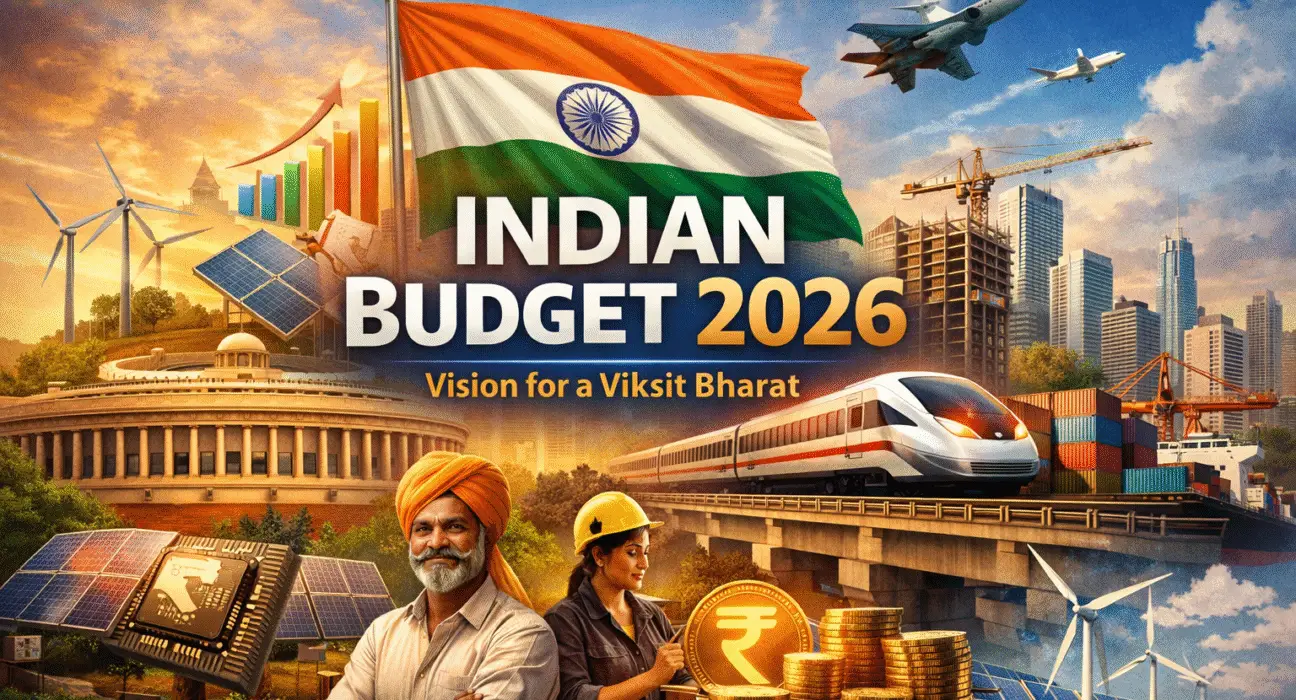
The Union Budget 2026–27, presented by Finance Minister Nirmala Sitharaman, outlines India’s economic roadmap toward sustainable growth, infrastructure expansion, and inclusive development. With a strong focus on investment-led growth, fiscal discipline, and technology-driven transformation, the budget aims to accelerate India’s journey toward becoming a developed nation under the “Viksit Bharat 2047” vision.
The total budget size stands at approximately ₹53.5 lakh crore, reflecting the government’s continued emphasis on long-term economic stability, employment generation, and modernization of core sectors.
Economic Vision and Fiscal Strategy
1. Focus on Growth with Fiscal Discipline
The government has maintained a balanced approach by prioritizing economic growth while ensuring fiscal prudence. The fiscal deficit has been targeted at approximately 4.3% of GDP, indicating the government’s commitment to maintaining macroeconomic stability.
This approach helps in:
- Controlling inflation
- Maintaining investor confidence
- Supporting sustainable economic expansion
- Strengthening India’s global economic credibility
The budget follows a strategy centered around three core duties (Kartavyas):
- Accelerating economic growth
- Meeting citizen aspirations
- Ensuring inclusive development
Infrastructure Development: The Backbone of Budget 2026
2. Record Capital Expenditure
Infrastructure remains the largest focus area of Budget 2026, with a record ₹12.2 lakh crore capital expenditure allocation. This marks a significant increase compared to previous years and continues India’s infrastructure-led development model.
Key Infrastructure Announcements
Railways and Transport
- Development of seven new high-speed rail corridors
- Expansion of dedicated freight corridors
- Modernization of rail networks for faster cargo movement
Urban and Regional Development
- Development of economic regions in Tier-2 and Tier-3 cities
- Increased investment in smart city infrastructure
- Focus on metro connectivity and public transport
Logistics and Waterways
- Operationalization of 20 new national waterways
- Strengthening port connectivity
- Reduction of logistics costs to improve trade efficiency
This infrastructure push is expected to generate employment, reduce transportation costs, and stimulate regional economic growth.
Manufacturing and Industrial Growth
3. Boost to “Make in India” and Strategic Industries
The government has announced multiple initiatives to strengthen domestic manufacturing and reduce import dependency.
Key Manufacturing Initiatives
- Expansion of semiconductor production under India Semiconductor Mission 2.0
- Special investments in biopharma, electronics, textiles, and chemical industries
- Container manufacturing development to support trade logistics
- Incentives for foreign companies to set up production in India
These initiatives aim to position India as a global manufacturing hub while creating large-scale employment opportunities.
MSME and Startup Ecosystem Support
4. Strengthening Small and Medium Enterprises
MSMEs play a vital role in India’s employment and economic output. The budget introduces several measures to strengthen the sector.
Major Announcements
- ₹10,000 crore SME Growth Fund
- Additional credit support through digital trade financing platforms
- Professional advisory support for MSMEs in smaller cities
These steps are expected to enhance business competitiveness and improve access to finance.
Agriculture and Rural Development
5. Focus on Farmer Welfare and Rural Infrastructure
The government has emphasized strengthening rural income and agricultural productivity.
Key Initiatives
- Increased investment in irrigation and rural infrastructure
- Expansion of agri-logistics and storage facilities
- Support for technology adoption in farming
These measures aim to enhance agricultural efficiency and increase farmer income.
Technology, Digital Economy, and Creator Ecosystem
6. Emerging Digital and Creative Economy
Recognizing the importance of the digital workforce, Budget 2026 introduces initiatives to promote the creator and digital content economy.
Major Highlights
- Establishment of National Creator Labs across schools and colleges
- Investment in animation, gaming, and visual effects training
- Promotion of digital skill development programs
This initiative is expected to open new career opportunities for young professionals and students.
Defence and National Security
7. Increased Defence Modernization
The government has significantly increased defence capital expenditure, emphasizing domestic defence manufacturing.
Focus Areas
- Indigenization of defence equipment
- Tax exemptions for aircraft and defence equipment manufacturing
- Strengthening aerospace and defence research sectors
This strategy strengthens national security while promoting domestic defence production.
Energy and Sustainability Initiatives
8. Green Energy and Climate Commitments
Budget 2026 highlights India’s commitment to sustainability and energy security.
Key Measures
- Investments in carbon capture and storage technologies
- Incentives for solar energy and battery manufacturing
- Support for nuclear energy expansion
- Promotion of clean transportation infrastructure
These initiatives aim to reduce carbon emissions and ensure long-term energy security.
Tourism, Services, and Cultural Economy
9. Growth in Tourism and Service Sector
Tourism and services have been identified as key drivers of employment and foreign exchange earnings.
Major Plans
- Development of medical tourism hubs
- Creation of eco-tourism trails
- Development of heritage and archaeological sites
- Expansion of religious tourism circuits
This sector is expected to boost employment and local economic development.
Taxation and Financial Market Reforms
10. Tax Simplification and Investment Reforms
The budget introduces measures to simplify taxation and attract foreign investment.
Key Highlights
- Simplified income tax framework
- Increased investment limits for NRIs and foreign investors
- Strengthening corporate bond markets
- Encouragement of Real Estate Investment Trusts (REITs)
These reforms aim to enhance transparency, improve liquidity, and strengthen capital markets.
Impact of Budget 2026 on Common Citizens
The Union Budget 2026 affects citizens in multiple ways:
Positive Impacts
- Improved transportation and infrastructure
- Increased employment opportunities
- Expansion of digital and creative career options
- Better rural and agricultural support
- Strengthened national security
Long-Term Benefits
- Balanced regional development
- Increased global competitiveness
- Sustainable and environmentally friendly growth
Challenges and Criticism
Despite its strong growth focus, some economists and industry experts have raised concerns:
- Limited direct tax relief for middle-class taxpayers
- Increased regulatory complexity in certain sectors
- Market volatility due to taxation changes in financial instruments
However, the government has prioritized long-term economic stability over short-term populist measures.
Conclusion
The Indian Budget 2026 represents a strategic blueprint for long-term economic transformation. By prioritizing infrastructure, manufacturing, technology, sustainability, and inclusive development, the government aims to accelerate India’s progress toward becoming a developed economy.
While the budget may not offer immediate relief to all sectors, it lays a strong foundation for sustained economic growth, employment generation, and global competitiveness.
Overall, Budget 2026 reflects a forward-looking vision focused on building a resilient and innovation-driven Indian economy.